When Nettleship Sawyer instructed Prokil to inspect a Bournemouth property for wet rot, the signs were subtle. There was cracked plaster and slight timber discolouration. However, beneath the surface lay previous damage to an internal roof ridge. This required specialist treatment and partial replacement. It shows that the difference between structural and cosmetic timber damage isn’t always easy to see for those who aren’t trained.
This guide explains how to spot the difference. You will learn what cosmetic damage looks like, which signs indicate structural issues, and how to perform a basic self-check. We also cover when to call a qualified surveyor and what to expect from a professional timber inspection.
What Causes Timber Damage?
Timber deterioration is often the result of one or more environmental or structural pressures. Moisture ingress, biological decay, and structural shifts are the three most common triggers of damage.
1. Excess Moisture
Timber that is often wet due to poor ventilation, rising damp, or roof leaks can be at risk of fungal decay. The UK Property Care Association (PCA) says that when moisture levels go over 20%, the chance of wet rot and dry rot in internal timbers rises
2. Biological Infestation
Wood-boring insects such as the common furniture beetle (Anobium punctatum) and fungal organisms like Serpula lacrymans (dry rot) weaken internal fibres, often without visible signs in the early stages. These agents gradually compromise the integrity of the timber.
3. Structural Movement
Subsidence, settlement, and beam overload can cause stress fractures and distort load-bearing timbers. Floor joists might sag, door frames may shift, and lintels can crack. These problems often suggest more serious damage beneath the surface.
Cosmetic Timber Damage Explained
Cosmetic timber damage affects only the surface finish and does not impair load-bearing strength.
Common Indicators:
- Flaking varnish or peeling paint is caused by exposure to ultraviolet light or fluctuations in humidity.
- Light scratches or scuffs may occur from everyday use.
- Localised staining in kitchens, bathrooms, or utility areas.
- Hairline cracks in decorative mouldings, panelling, or trim.
- Slight swelling of floorboards or architraves after brief moisture contact.
Such flaws are usually resolved through cleaning, sanding, or refinishing. Owners need to be watchful. Soft fibres, a constant musty smell, or ongoing discolouration could mean hidden dampness or early signs of fungi. Where uncertainty exists, it’s smart to get a professional evaluation. Quick fixes can let hidden problems grow unnoticed.
Structural Timber Damage Explained
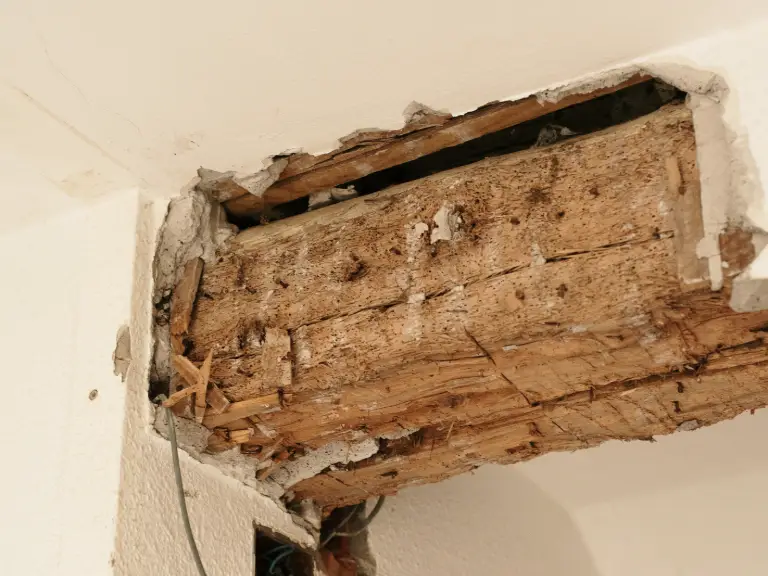
Cosmetic flaws may appear small, but structural timber damage is more severe. It often indicates a risk to the strength or stability of load-bearing parts. This may result from prolonged dampness, decay, or physical strain.
Key signs of structural damage include:
- Timber that crumbles when probed or produces a hollow sound when tapped
- Deep cracks running along the grain, particularly if they exceed 3 mm
- Sagging beams or uneven floors with noticeable bounce underfoot
- Dislodged door or window frames that no longer sit flush
- Visible fungal growth, such as dry rot mycelium or fruiting bodies
This damage weakens the timber and can also harm nearby structural parts. If left unresolved, it can lead to more extensive repairs and, in severe cases, pose safety risks.
How to Tell the Difference in Three Simple Steps
Property owners can conduct a quick self-check to determine if timber damage is merely cosmetic or requires further investigation. These checks are not diagnostic but can offer helpful early insights.
1. Tap & Probe Test
Use the handle of a screwdriver to gently tap the timber. A hollow sound or a soft, crumbling texture could indicate internal decay. In contrast, cosmetic wear tends to feel solid and remain at the surface.
2. Crack Width Assessment
Measure visible cracks using a simple gauge or compare them against a standard credit card (approximately 3 mm). Narrow hairline cracks are often decorative. Wider splits, especially those near load-bearing areas, may indicate stress or failure.
3. Monitor Over Time
Mark the affected area with a pencil and recheck after three months. If the crack or deformity has expanded, this may suggest active movement. Stable, unchanged damage is more likely cosmetic.
If any of these checks raise concerns or if there’s damage in older timber frameworks, it’s best to get a professional survey.
Why Book a Professional Timber Survey?
Accurately diagnosing timber damage often requires more than a visual inspection. At Prokil, our surveys are done by skilled professionals, who are certified by the Property Care Association (PCA). They are certified surveyors in remedial treatments (CSRT) or structural waterproofing (CSSW). These qualifications ensure each survey is completed with technical precision and industry-recognised expertise.
A typical Damp and Timber Survey covers:
- Moisture readings
- Assessments of timber integrity
- Photographic evidence
- A written report that suggests the next steps
There is no obligation to proceed with remedial work, though our team can assist with all forms of treatment and repair if needed.
Prokil offers a comprehensive range of repair services when structural repairs are required. This includes issues like sagging joists or decayed beams. These include Cavity Wall Tie Replacement, Crack Stitching, and Timber Preservation Treatments. Every repair is carried out by trained technicians and backed by a written guarantee of up to 20 years.
Know the Signs. Preserve the Structure.
Knowing the difference between cosmetic and structural timber damage is essential. Cosmetic flaws may only affect the surface and can often be managed through routine maintenance. Structural damage puts your building at risk. Identifying problems early can prevent further damage, minimise disruptions, and reduce long-term costs.
If you see cracked, sagging, or softening timber, or if you’re unsure about the problem’s seriousness, Prokil’s surveyors can help. We bring over 50 years of experience to the table. As members of the Property Care Association, our CSRT-qualified professionals ensure expert assessments. We focus on providing clear and lasting solutions with care and attention.
Call 0800 048 9488 or get in touch to request a no-obligation survey today and gain the confidence of knowing your timber is in expert hands.